Heritage · Listed Buildings, Museums & Archives
Protect the
irreplaceable.
Fire, security and life safety for listed buildings, museums, galleries, archives and country houses, engineered to protect what cannot be replaced.
Heritage · Listed Buildings, Museums & Archives
Fire, security and life safety for listed buildings, museums, galleries, archives and country houses, engineered to protect what cannot be replaced.
In heritage environments, fire protection is a balance: rapid detection paired with suppression that preserves the structure. When that balance is wrong, the system itself can cause the greatest loss.
What We Do
Grade I and Grade II listed buildings, museums and archives ask three things of a fire and security strategy: find a fire early, contain it without destroying the contents, and disappear into the architecture in between. We design every element around those three priorities, in close coordination with conservation officers, listed-building consent officers and heritage architects.
 Heritage Suppression Specialist
A conventional sprinkler controls fire by saturating the space. In a Grade I library, museum archive or historic chapel, that water discharge can do more damage than the fire itself.
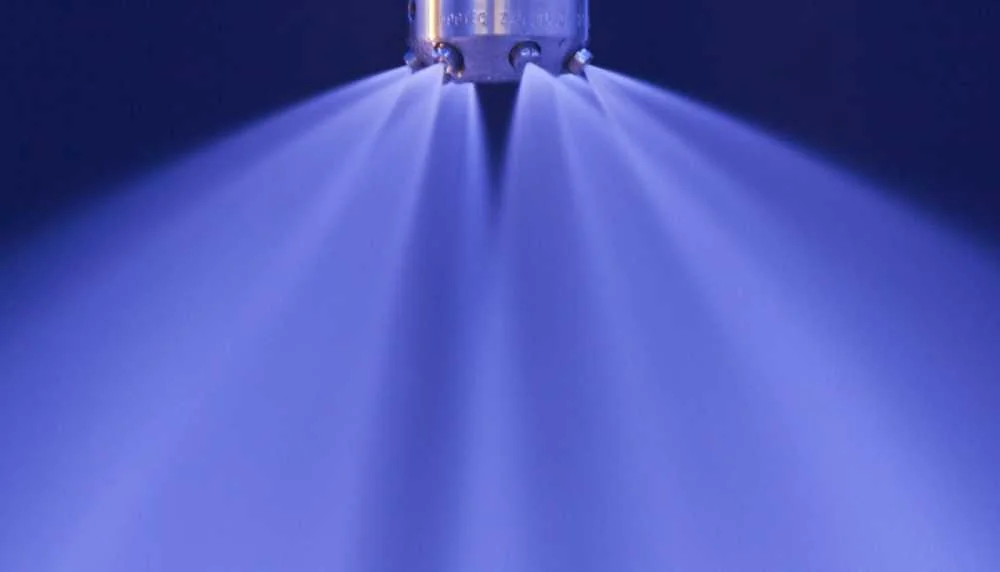
Fogtec high-pressure water mist atomises water into ultra-fine droplets that cool the flame, displace oxygen and evaporate on hot surfaces — suppressing fire with a fraction of the water and leaving the contents intact. Tested to BS EN 14972, with LPCB-approved components, and designed in line with RISCAuthority guidance for high-value and heritage assets.
Classification
Class I per NFPA 750 — the finest droplet distribution and the largest reaction surface per litre of water. Fogtec runs high-pressure (50–200 bar) so the nozzle has the energy to atomise and to drive droplets through rising heat and smoke.
Why High Pressure?
Higher pressure means more energy to split the water and more momentum on the droplets. Drop the pressure and you get bigger droplets, less momentum, or both.
Independent research shows low-pressure water mist is measurably less effective at cutting heat-release rate and combustion emissions (CO2, CO, NOX, HCN).
Pump Systems
Operating pressures of 120–140 bar from modular pump units, sized in 25–1000 l/min increments to suit the project. Electric or diesel drive, integrated filtration, and PLC controls that interface directly with the fire alarm panel.
ESG Aspects
A fraction of the water of a sprinkler, no chemical agents, and re-usable major components — supporting client ESG goals as well as conservation.
A fraction of the water of a sprinkler discharge, dramatically reducing secondary damage to artefacts, archives, paintings, plasterwork and historic timber.
Stainless-steel pipework at smaller diameters routes around historic fabric where sprinkler runs simply can't go, minimising fixings into protected surfaces.
The fine mist evaporates on contact with hot surfaces, protecting AV, projectors, lighting rigs and conservation electronics that a sprinkler discharge would write off.
Self-contained pump skids and on-site water reservoirs: no reliance on mains pressure, suitable for rural country houses and remote estate properties.
Side By Side
Insurers, conservation officers and trustees increasingly ask the same question: when the system goes off, what does the building look like the morning after? The honest answer depends almost entirely on which technology was chosen.
Conventional Sprinkler
Fogtec Watermist
Comparative figures are typical — actual performance depends on hazard class, ceiling height and design density. We model both options at concept stage so the heritage client and their insurer can see the trade-off in their own building.
Discreet Detection
In a listed building, the goal is to detect very early — before flame, before suppression activation — and to do so with hardware that doesn't shout from a stuccoed ceiling. We specify around minimum visual impact and minimum disruption during install and test.
Aspirating smoke detection draws air through capillary tubing routed behind cornices, panelling and roof voids — sensitivity orders of magnitude beyond a point detector, with no visible heads in the historic ceiling.
Where point detectors are required, Gent Self-Test heads carry an internal smoke and heat element — annual BS 5839 testing is launched remotely through the Honeywell CLSS app, with no engineer cherry-picker into the gallery.
Firebeam Xtra optical beam detectors cover hammerbeam halls, naves and double-height galleries up to 160 m — single line-of-sight installs that disappear against ceiling timberwork.
Britannia P50 service-free extinguishers — Kevlar composite, 10-year service interval, no metal corrosion or rust staining onto historic floors. A single annual visual check; no engineer-led recharge for a decade. Kitemarked to BS EN 3.
Who We Work With
Custodians, conservation architects and trustees — the organisations responsible for the buildings and collections we hold in common.
Built Around
Working in Grade I and Grade II listed properties means routes, fixings and finishes coordinated with conservation officers and heritage architects from the first survey — minimum visual impact, reversible installation where possible, and full support through the listed-building consent process.
Heritage insurers increasingly demand certified watermist or gaseous suppression in high-value collections — we design and document to those expectations from day one.
Out-of-hours installs, silent testing and self-test detection — services run while exhibits stay open, tours stay on, and services stay scheduled.
Heritage estates think in decades — our maintenance contracts, named account managers and 24/7 monitoring are built for that timeframe.
 Solution Silver Partner
As an Axis Silver Solution Partner, we deploy small-form-factor network cameras and discreet network intercoms designed to coexist with historic architecture — managed through Axis Camera Station Pro or Milestone XProtect®, certified to BS EN 62676 and GDPR-compliant by design.
Discreet small-pixel cameras with object analytics — alerting on unusual proximity to artefacts, after-hours movement and forced-door events.
Thermal cameras give visual confirmation of overheating plant — boilers, transformers, lighting rigs — well before flame, ahead of any conventional detector.
Thermal + radar-fusion detection for country-house grounds and walled gardens, ANPR for visitor parking and AI classification to suppress wildlife false alarms.
Network horn speakers and active deterrence cameras give staged escalation for after-hours intrusion — turning trespassers away before they reach the building.
Our Approach
Heritage projects reward early engagement — every routing decision is easier to take with the conservation officer in the room from day one.
01 Inception
We engage at the earliest stage to de-risk projects, influence design decisions and embed fire and security requirements from the ground up.
Book a site survey →02 Construction
Our teams deliver to programme, coordinating with other trades for quality installation and a smooth commissioning process.
Book a site survey →03 Lifecycle
Planned preventive maintenance, compliance testing, 24/7 monitoring and rapid response — keeping your systems performing for the facility's lifetime.
Book a site survey →A conventional sprinkler controls fire by drenching the room. Fogtec high-pressure water mist achieves comparable fire-control performance using a fraction of the water, with droplets fine enough to evaporate on hot surfaces rather than soak the contents. In a Grade I library or museum store, that can be the difference between a recoverable incident and a total loss.
Fogtec systems are supported by full-scale fire testing to relevant BS EN 14972 protocols, with LPCB-approved components where applicable, and are designed in accordance with RISCAuthority guidance for the protection of high-value and heritage assets.
Get Started
Grade I or Grade II listed building, museum, archive or country house — we'll design a fire and security strategy that protects the contents and the fabric, sensitively delivered, with the documentation listed-building consent demands.
Book a site survey